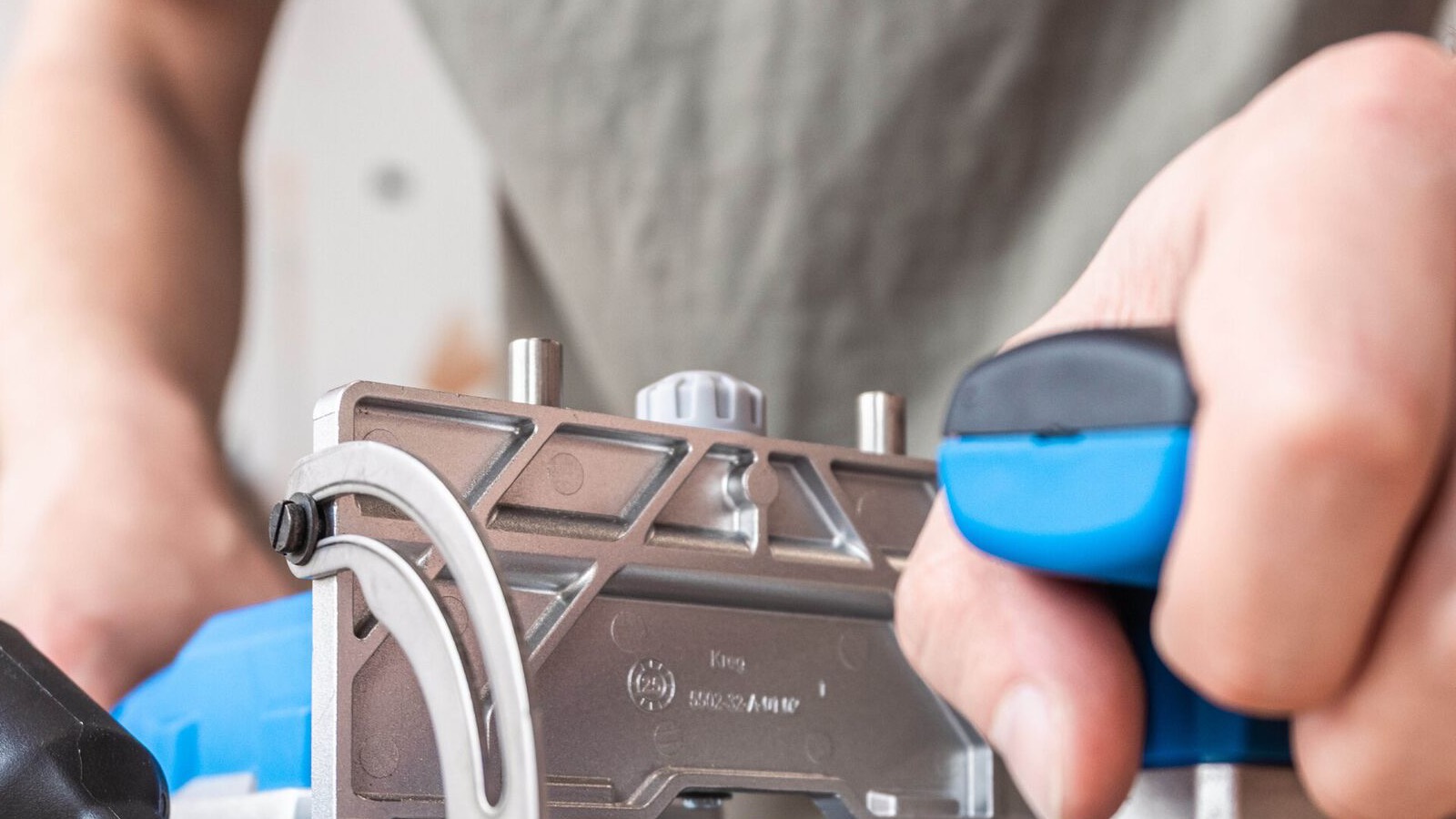
The Kreg Edge and Festool DOMINO DF 500 solve the same broad problem: they cut elongated mortises for fast, repeatable loose-tenon joinery. That does not make them interchangeable systems. The Kreg Edge is a cordless 20V tool built around Kreg’s new 5 mm through 10 mm cutters, tenons, and setup accessories. The current Festool DF 500 R is a corded 120V machine within the established DOMINO system, with cutters from 4 mm through 10 mm and a larger catalog of system accessories.
The most useful overlap is narrower than the product categories suggest. Kreg explicitly says its Edge mortising cutters are compatible with select Festool DOMINO joiners. Kreg does not make the same claim for its loose tenons, batteries, fences, stops, or other accessories. A shared cutter diameter is therefore not permission to treat the two ecosystems as universally cross-compatible.
Kreg Edge vs. Festool DF 500 specifications
| Specification | Kreg Edge kit | Festool DOMINO DF 500 RQ-Set |
|---|---|---|
| Power | 20V MAX battery; 18V nominal | 120V AC, 420 watts |
| No-load cutter speed | 18,500 RPM | 25,500 RPM |
| Cutter sizes | 5, 6, 8, and 10 mm | 4, 5, 6, 8, and 10 mm |
| Maximum mortise depth | 28 mm | 28 mm |
| Fence angle | 0-90 degrees; positive stops at 0, 22.5, 45, 67.5, and 90 degrees | 0-90 degrees |
| Stated stock range | 7/16 to 2-3/8 inches; manual mode for thicker stock | Routing-height adjustment from 5 to 30 mm; Festool says workpieces can be as thin as 12 mm |
| Dust connection | Built-in chip-relief slots and 1-1/4-inch dust port | 27 mm dust-extraction connection |
| Power-source mobility | Cordless; kit includes 4.0 Ah battery and charger | Corded; 4 m detachable power cord |
These numbers establish capacity, not cutting quality. A higher no-load RPM does not by itself prove that one machine cuts faster or leaves a cleaner mortise. Cutter geometry, electronics, feed pressure, wood species, cutter condition, registration, and chip evacuation all affect the result. ToolCurve has not run a controlled head-to-head test, so this comparison does not make performance claims that the manufacturers’ documentation cannot support.
Where the workflows differ
Power and portability
The Kreg Edge kit includes a Blue Ion 4.0 Ah battery and charger, so it can move between a bench, a built-in installation, and a jobsite without finding an outlet. That is its clearest workflow distinction from the corded DF 500 R. Battery runtime still depends on stock, cutter size, mortise depth, temperature, and how aggressively the tool is fed; Kreg does not publish a universal mortise count for the kit page, so plan around spare-battery access rather than an assumed runtime.
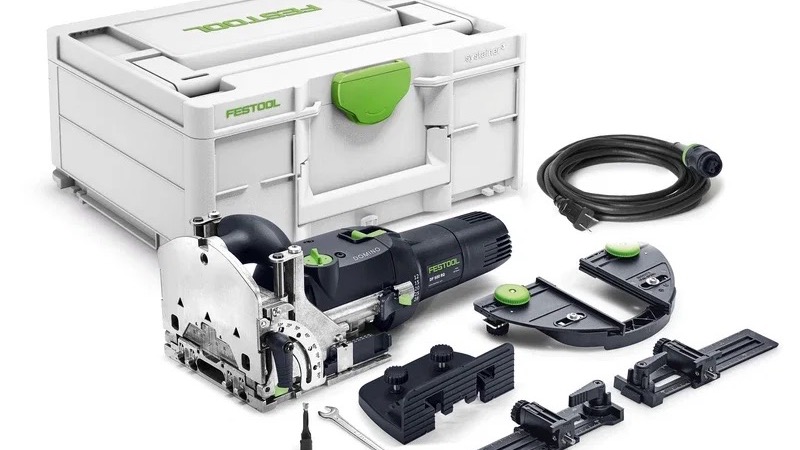
The DF 500 R uses a detachable 4 m power cord. In a fixed shop, the cord may be a minor tradeoff, particularly because Festool expects a 27 mm extractor hose during mortising. On a finished-site installation, a battery tool can remove one cable from the work area, but dust collection may still add a hose. Cordless power and a completely hose-free process are separate decisions.
Registration, fence setup, and repeat work
Kreg builds several setup aids into or around the Edge. Its fence adjusts from 0 to 90 degrees with five positive-stop angles. Configurable edge stops register matching mortises from an edge; the included Narrow Stock Guide centers the cut on narrow pieces; and the included Stability Base enlarges the reference surface for face mortising. A micro-adjustable fence and one-touch mortise-width control handle nonstandard material and give assembly clearance where needed.
Festool takes a system-oriented approach. The current DF 500 R uses built-in indexing pins and preset routing depths of 12, 15, 20, 25, and 28 mm. The RQ-Set includes a support bracket, trim stop, and cross stop. Those parts extend the machine’s reference surface, register narrow pieces, and establish repeat spacing without asking the operator to lay out every mortise individually. The practical question is not which list has more features; it is which registration method matches the work you repeat most often.
Thin stock and cutter range
The Festool’s 4 mm cutter option is a real distinction for small sections and thin material. Festool says the DF 500 can join workpieces as thin as 12 mm and lists DOMINO tenons from 4 x 20 mm through 10 x 50 mm. The Kreg Edge starts at 5 mm and lists a broad 7/16-inch to 2-3/8-inch material range, with a manual mode for thicker stock. For cabinet cases, face frames, tables, and general furniture, both size ranges cover common work. For especially thin drawer parts, small rails, or an existing supply of 4 mm DOMINO tenons, the Festool system reaches one size smaller.
Chip collection and dust extraction
Kreg says the Edge’s chip-relief slots reduce buildup and minimize the need for dedicated extraction during shorter sessions. Its current product-page Q&A also identifies a 1-1/4-inch dust port for larger jobs. That is not a promise of dust-free work, and it does not remove the need for respiratory protection or cleanup appropriate to the material.
Festool specifies a 27 mm extraction connection and tells users to connect a dust extractor to keep mortises clean and precise. Deep mortises create chips quickly, so extraction can support visibility, consistency, and a cleaner work area. With either machine, stop and clear a packed mortise rather than forcing the cutter, and follow the current manual for hose connection and personal protective equipment.
What is actually compatible?
Kreg Edge cutters: limited, manufacturer-stated crossover
Kreg’s current Edge cutter page offers 5, 6, 8, and 10 mm carbide-tipped cutters and says they are compatible with select Festool DOMINO joiners. That is the strongest documented bridge between the systems. The DF 500 R accepts those four nominal cutter diameters as well as its own 4 mm cutter.
Keep the word “select” attached to the claim. Before installing a Kreg cutter in a Festool machine, match the exact joiner model, cutter diameter, shank and thread geometry, allowed cutting depth, and current manufacturer instructions. The Kreg page does not establish compatibility with every DOMINO model, and the DF 700 uses a different cutter range and capacity. Conversely, the available sources do not state that Festool cutters are approved for the Kreg Edge, so do not assume compatibility runs in both directions.
Tenons: matching millimeters do not prove interchangeability
Kreg’s loose-tenon page identifies its 5, 6, 8, and 10 mm hardwood tenons for mortises made by the Kreg Edge and MortiseMate. It does not name the Festool DF 500. Festool’s DOMINO tenons have their own lengths, fluting, glue pockets, material options, and intended mortise geometry. Even where the thickness number matches, width, length, corner profile, clearance, and glue space can differ.
For that reason, a Kreg cutter approved for a select Festool joiner does not automatically validate Kreg tenons in a DOMINO mortise—or Festool tenons in an Edge-cut mortise. Use the tenon system specified for the machine and cutter setup unless both manufacturers publish exact, current approval for the mixed combination. Prove the fit and glue space in scrap before committing project parts.
Batteries, stops, fences, and accessories stay system-specific
Kreg Blue Ion batteries are for the Kreg 20V platform. The corded DF 500 R has no battery, while the cordless Festool DFC 500 uses Festool’s 18V system. The Edge Narrow Stock Guide, Stability Base, edge stops, and fence are shaped for the Edge. Festool’s support bracket, trim stop, cross stop, handrail fence, and other DOMINO accessories are shaped for the DOMINO machines. No current primary source reviewed for this article supports crossing those parts between brands.
A current cordless caveat: Festool also sells the DFC 500
A comparison framed only as “cordless Kreg versus corded Festool” is incomplete in 2026. Festool’s current DFC 500 is an 18V cordless DOMINO joiner. Festool lists the same 4, 5, 6, 8, and 10 mm cutter range, the same 28 mm maximum routing depth, a 27 mm dust connection, and an 18,500 RPM no-load speed. The DFC 500 E-Basic is sold without a battery or charger, so the relevant delivered cost depends on whether the buyer already owns Festool 18V batteries.
The DFC 500 does not erase the Kreg Edge’s value proposition, and it is not the subject of the main spec table because the requested comparison is the DF 500 R. It does change the buying decision: a user who wants cordless mobility but prefers DOMINO tenons and accessories should compare the Edge with the DFC 500 before choosing a system.
Which joiner fits your shop?
Choose the Kreg Edge when…
- You want a ready-to-work cordless kit with a battery and charger.
- Your projects fit the 5, 6, 8, and 10 mm cutter range.
- The included Narrow Stock Guide and Stability Base match your recurring parts.
- Imperial-first thickness references reduce setup friction in your shop.
- You prefer Kreg’s lower initial kit pricing and are comfortable building a new cutter-and-tenon inventory.
Choose the Festool DF 500 R when…
- You already own DOMINO cutters, tenons, stops, or dust-extraction equipment.
- You need the 4 mm cutter for thin or small work.
- The RQ-Set’s cross stop, trim stop, support bracket, and Systainer suit your workflow.
- You want access to the broader DOMINO tenon and accessory system.
- A cord is acceptable at the bench and you normally connect a 27 mm extractor hose anyway.
If you already own a DF 500
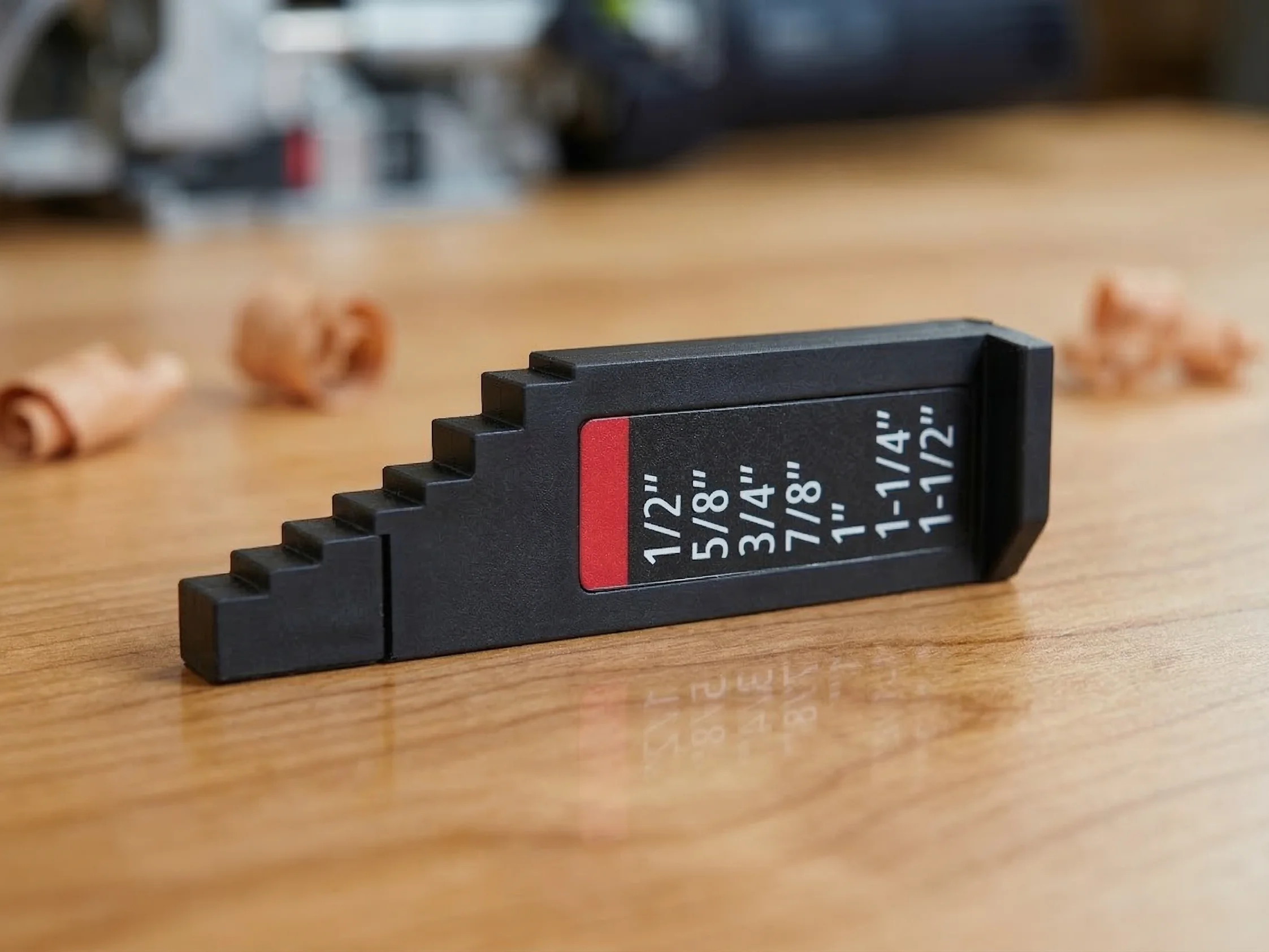
A new machine is not the only way to improve an established workflow. The current, in-stock ToolCurve DF 500 Imperial Thickness Gauge replaces repeated metric-to-inch conversion at the fence with common fractional thickness references. It does not change cutter or tenon compatibility; it is simply a setup aid for the DF 500. ToolCurve also has a separate installation guide for fitting and checking the gauge.
Before the first project
- Pick the system before buying bulk tenons. Cutter crossover is not the same as consumable crossover.
- Read the exact manual. Model families and set contents change. Match the number on the machine, not a retailer’s shortened title.
- Remove power for setup. Take the battery out of the Edge or unplug the DF 500 before changing a cutter, attaching a stop, or adjusting parts near the cutter.
- Prove every setup in scrap. Check fence height, plunge depth, mortise width, registration, tenon fit, and glue clearance before cutting project parts.
- Support the reference surface. Clamp the work and use the included base, bracket, or narrow-stock accessory when the standard fence cannot sit securely.
- Plan chip control. Connect suitable extraction when the manual, material, or length of the session calls for it, and keep the mortise clear rather than forcing the plunge.
The Kreg Edge is not a generic cordless DOMINO, and the Festool DF 500 is not simply the expensive version of the same kit. They share a joinery method and, in a limited manufacturer-stated case, certain Kreg cutter sizes. The better purchase is the one whose power source, smallest cutter, registration method, dust setup, consumables, and existing shop system match the work you actually build.
Comments