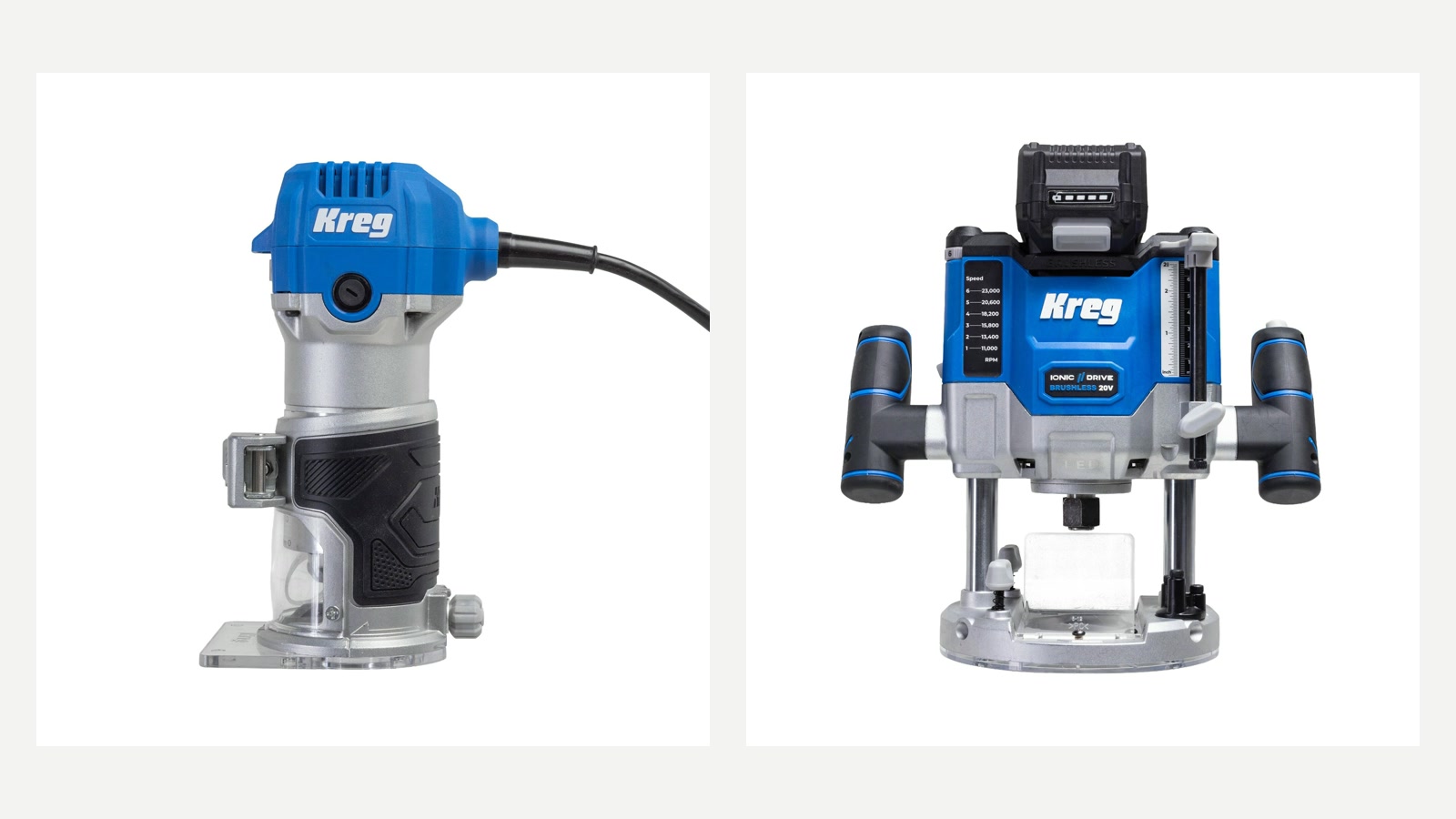
Picking between the Kreg trim router and the 20V plunge router isn’t about which one is better. It’s about which cuts you make most. The PRSPR125 is a compact, corded 1 1/4 HP trim router for 1/4″ and 6 mm bits. The KPTBPR225B kit is a much bigger cordless plunge router that Kreg rates at 2 1/4 HP, with 1/4″ and 1/2″ collets, 2 5/8″ of plunge, and router-table features built in.
One note before we start: Kreg also sells a 20V Ionic Drive trim router, which is a different tool from the PRSPR125 covered here. Check the item number before you buy a base, collet, dust adapter, or table accessory. “Kreg router” on a label isn’t enough.
Quick answer
Get the PRSPR125 trim router if you mostly do edge profiles, flush trimming, shallow grooves, template work, and other handheld jobs where a small body and a clear view of the bit help. Get the KPTBPR225B 20V plunge router if you need stopped dadoes, mortises, inlays, deeper plunges, 1/2″-shank bits, or a router Kreg supports in its current router tables.
If your projects cover both, the plunge router handles more of the heavy and table work, and the trim router is still the nimbler tool for light edge passes.
The specs that matter
| Specification | Kreg PRSPR125 trim router | Kreg KPTBPR225B 20V plunge router kit |
|---|---|---|
| Power source | 120V AC, 6.5 amp, 8-foot cord | Kreg Blue Ion 20V battery; kit includes 4.0 Ah battery and charger |
| Manufacturer power rating | 1 1/4 HP | 2 1/4 HP |
| Speed range | 16,000–32,000 RPM, six settings | 11,000–23,000 RPM, six settings |
| Included collets | 1/4 inch and 6 mm | 1/4 inch and 1/2 inch |
| Stated travel | Up to 1 9/16 inches of depth travel | 2 5/8 inches of plunge depth |
| Dust collection | Clear base and included 1 1/4-inch vacuum-compatible adapter | Integrated clear dust attachment included |
| Table support on current product page | Kreg lists tables within the trim-router accessory ecosystem | Kreg names the PRS1045, PRS2100, PRS4040, and undrilled insert plate |
These are Kreg’s published numbers, not our test results. Horsepower and no-load speed tell you different things: the trim router’s higher top RPM doesn’t mean it can cut more, and the plunge router’s bigger horsepower rating doesn’t mean every cut comes out cleaner. The bit, the material, how deep you cut per pass, how fast you feed, and your setup matter more.
Where the trim router shines
The PRSPR125 keeps everything close around a narrow motor and fixed base. Kreg lists soft start, a quick-release base, a collet lock, and a 1 3/8″ maximum bit diameter. That’s just right for everyday small-router jobs: easing an edge, trimming laminate, following a template, cutting a shallow profile, or cleaning up a small recess.
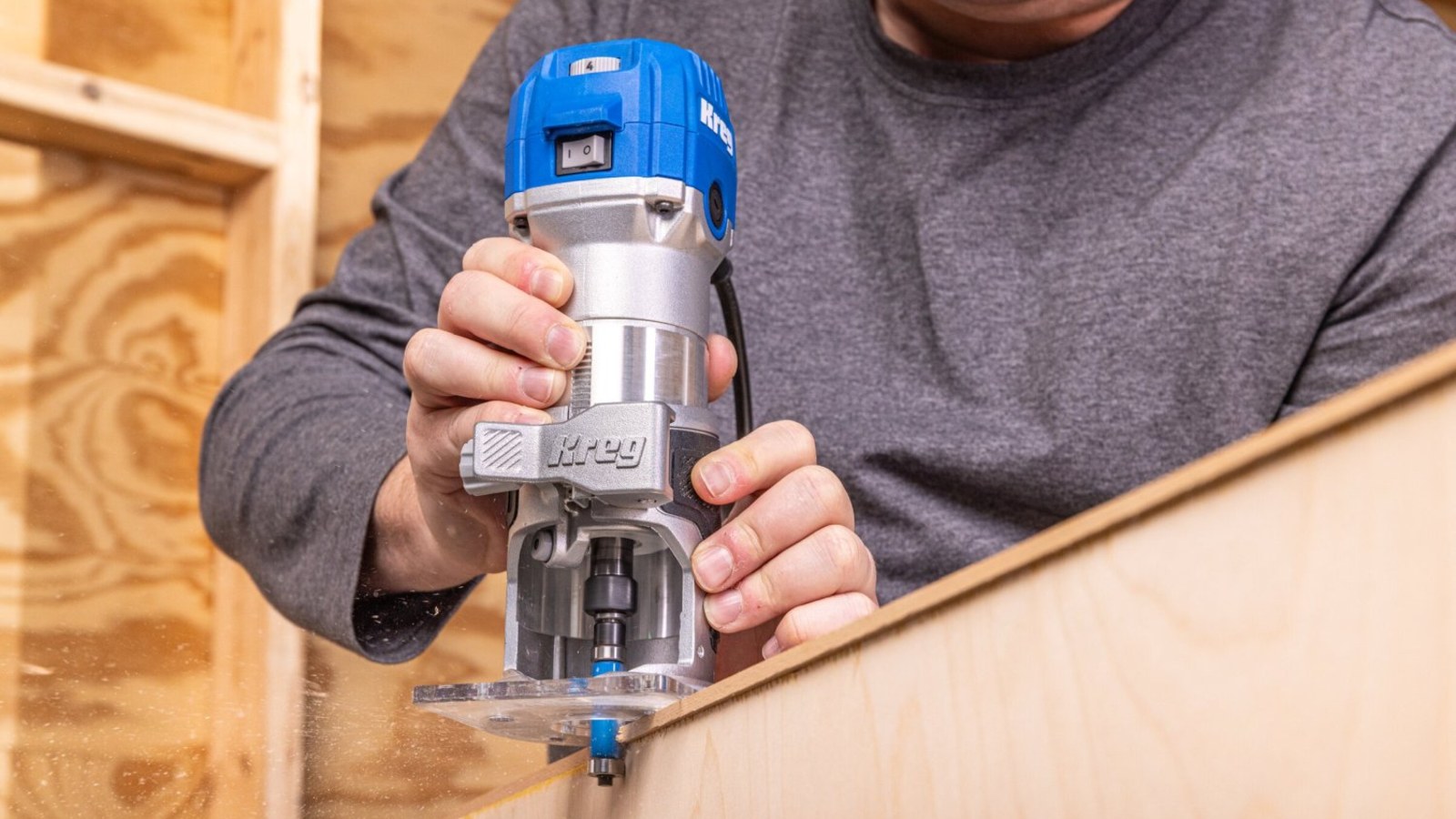
A small router is easier to steer when most of the base stays on the work, and the clear base and dust adapter keep the bit in sight. For the occasional deeper cut, Kreg sells a separate plunge base for the PRSPR125. That gives the small motor a plunge, but it doesn’t add a 1/2″ collet or turn it into the 2 1/4 HP router.
The cord is the main drawback. Eight feet reaches across most benches and panels, but on a big piece you still need to keep the cord from catching a corner or crossing the bit’s path.
Where the 20V plunge router pulls ahead
The KPTBPR225B is made to start a cut away from the edge and lower the bit into the work under control. Two handles, a three-step turret depth stop, and 2 5/8″ of plunge make it the better tool for stopped grooves, mortises, inlays, signs, and cuts you take down in stages. The 1/2″ collet also lets you run bigger-shank bits the PRSPR125 can’t take.
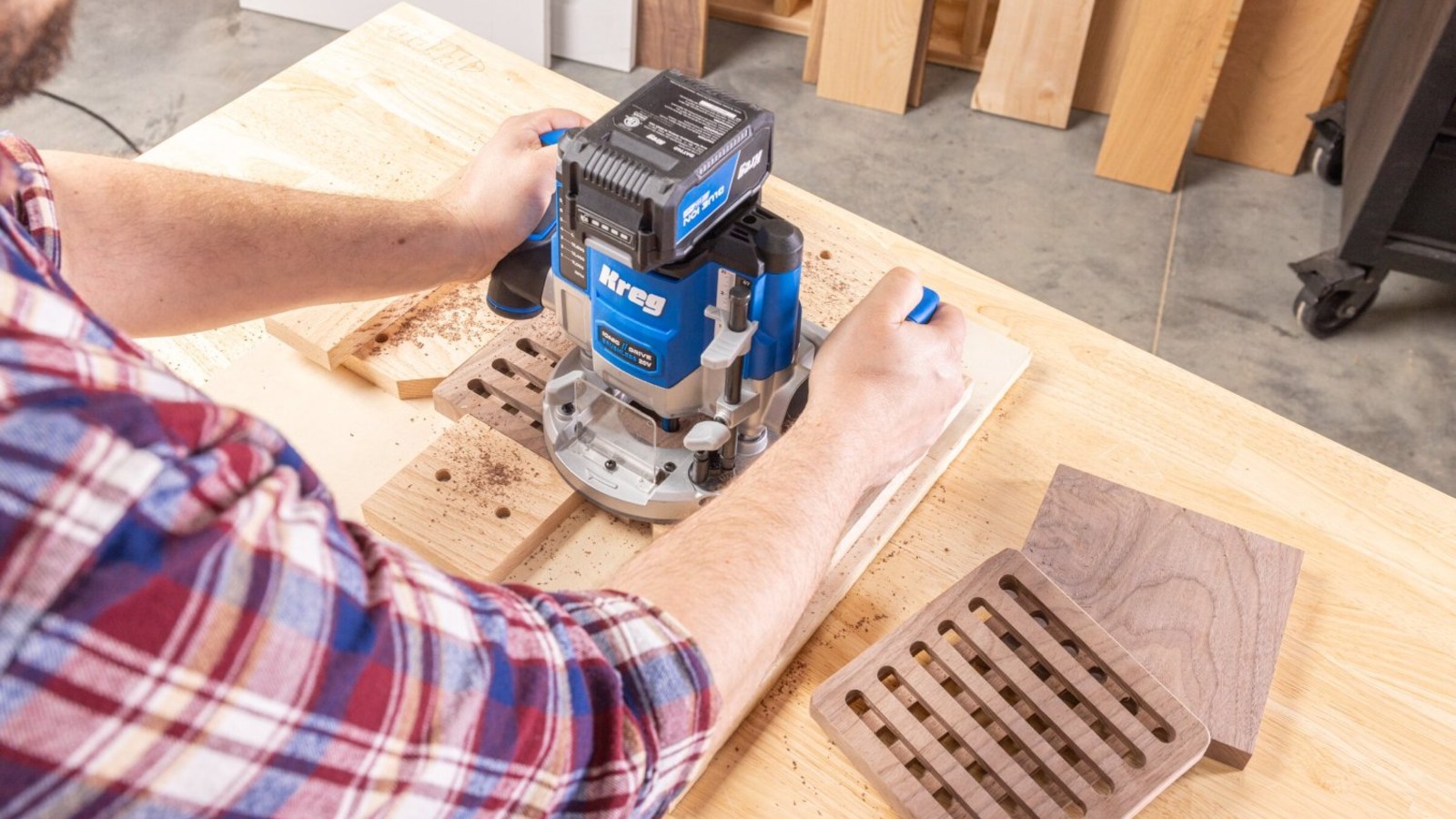
Going cordless helps on a big assembly, on a job site, or anywhere a cord would get in the way. Kreg says it works with any Blue Ion 20V battery and recommends 4.0 Ah or bigger; the kit comes with a 4.0 Ah pack. Runtime depends on the bit, depth, material, and feed rate, so plan your cuts with that in mind.
It’s also the better pick for a Kreg router table. Kreg says it works with the full-size Precision Router Table System, the benchtop table, and predrilled or undrilled insert plates, and it has above-the-table bit height adjustment without a separate lift. If you do a lot of table work, that matters more than going cordless, because you’re not reaching under the table every time you change the height.
Bits and speed: don’t just compare the top number
The PRSPR125 runs 16,000 to 32,000 RPM, takes 1/4″ or 6 mm shanks, and is capped at a 1 3/8″ bit diameter. The plunge router runs 11,000 to 23,000 RPM and comes with 1/4″ and 1/2″ collets. The lower speed range makes sense for a router meant to spin bigger bits, but the right setting still comes from the bit maker and the manual.
A 1/2″ shank is stiffer for big profiles and deep cuts, but just because a bit fits the collet doesn’t mean it’s safe to run. Check the bit diameter against the base opening, dust shroud, and table insert, and set a safe speed before you power up. Take several passes instead of forcing one deep cut.
Dust collection and visibility
Both routers come with dust collection. The trim router has a clear base and a 1 1/4″ adapter so you can still see the bit and your line. The plunge router has a clear dust attachment built in around the bit. Neither one catches every chip, especially on open edge work.
The bigger difference is the hose. A hose hanging off the bench can steer a small trim router, while the plunge router’s two handles give you more leverage but take up more room. Support the hose, leave enough slack for the whole pass, and do a dry run with the power off.
Which Kreg router should you get?
- Mostly edge profiles and flush trimming: the PRSPR125. The small fixed base is the right tool for light handheld work.
- Stopped dadoes, mortises, signs, and inlays: the KPTBPR225B. A real plunge, turret stops, and more travel are what these cuts need.
- Bigger 1/2″-shank bits: the plunge router. The trim router only comes with 1/4″ and 6 mm collets.
- Lots of Kreg router-table work: the plunge router, for the table support and above-the-table height adjustment. Kreg has table options for the PRSPR125 too; just check the exact table, plate, and mounting instructions.
- Big assemblies or no outlet nearby: the 20V plunge router, if you don’t mind the size and weight of a bigger router with a battery.
- One small router with lots of add-ons: the PRSPR125. Kreg sells a plunge base, tables, an edge guide, a circle guide, a base plate, and a hinge jig for it.
Check the model number before buying accessories
“Trim router” can mean the corded PRSPR125 or one of Kreg’s 20V trim routers, and the two routers in this article use different collets and bases too. Don’t move a base plate, dust adapter, plunge base, or table plate from one to the other because of the brand, the color, or a screw pattern that looks close.
We make a few accessories for Kreg’s trim routers, but none of them are made for both of these routers, so we’ve left them out here. For telling Kreg’s trim routers apart and setting them up, see our Kreg trim router setup guide.
Bottom line: the PRSPR125 is the small specialist for edge and detail work. The KPTBPR225B is the bigger machine for plunging, 1/2″ bits, cordless work, and Kreg’s router tables. Start with the cuts you make most, then check the exact model numbers before you buy accessories.
Comments