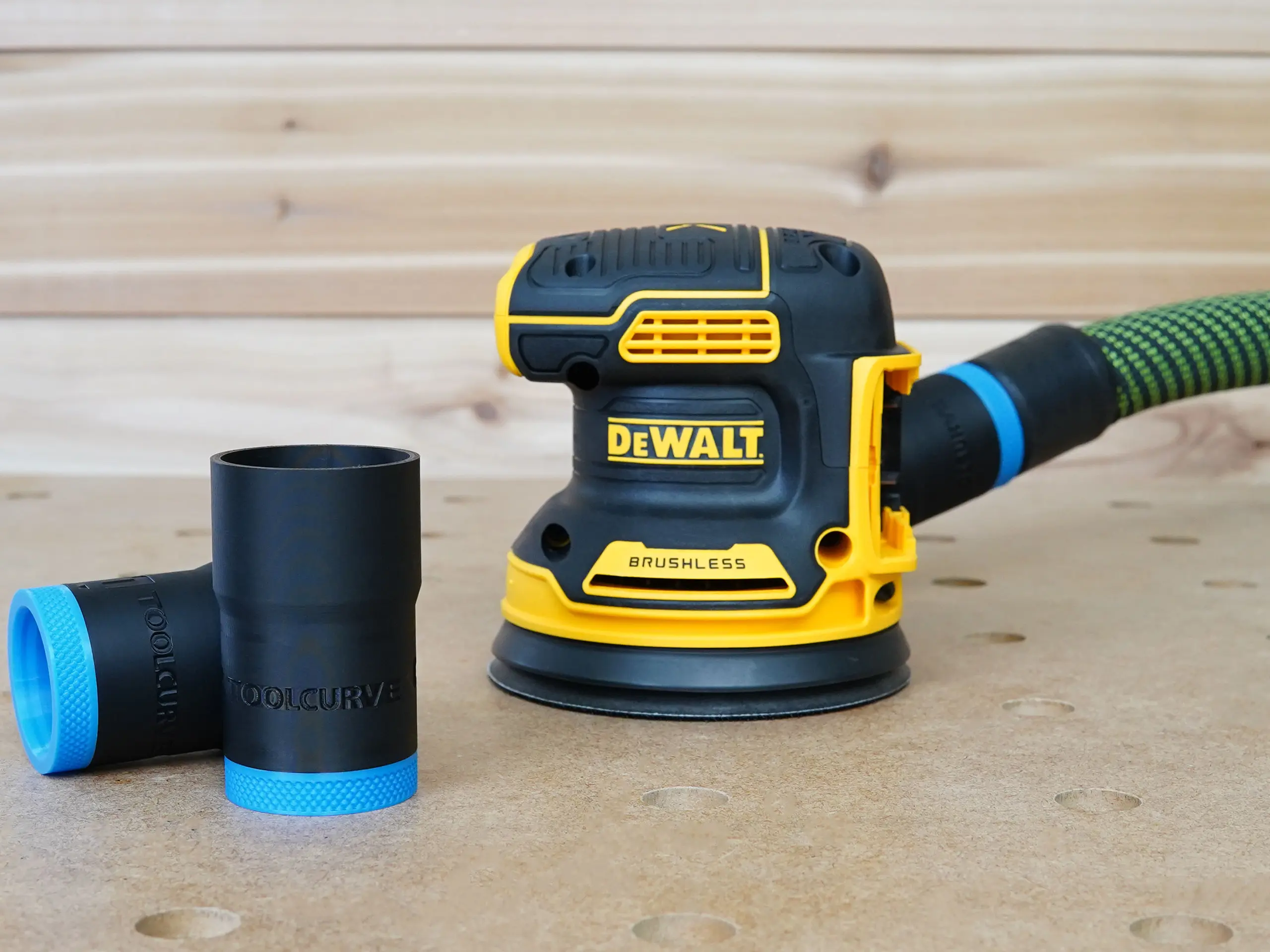
Searching for a DeWalt sander hose adapter usually turns up a pile of near-identical listings and no clear way to choose. The difficulty is that a DeWalt sander dust port does not follow one shape across the lineup. The practical order is to identify the sander model, confirm the dust port you actually have, and only then pick the size that matches your hose cuff. This guide covers the D26441, DWE6411, DCW200, DCW210 and DCW211.
One limit up front: this is a documentation-based guide. No firsthand fit testing was supplied for it, so nothing here claims a measured or tested fit. Where a fact comes from DEWALT, it is labeled as manufacturer documentation. Where it comes from a ToolCurve listing, it is labeled as seller-listed compatibility. Those are different kinds of evidence.
Step 1: Find the exact model on the sander
Read the model number from the data label on your sander, not from the box or a retailer page. The suffix matters less than the base model. A DCW210B (bare tool) and a DCW210D1 (kit) are the same sander body, and adapter fit would apply to the sander only. Kit contents like batteries and chargers are irrelevant to the dust port.
Then ask what shape the dust port is. The oval-port case is the first exception, and it is covered below.
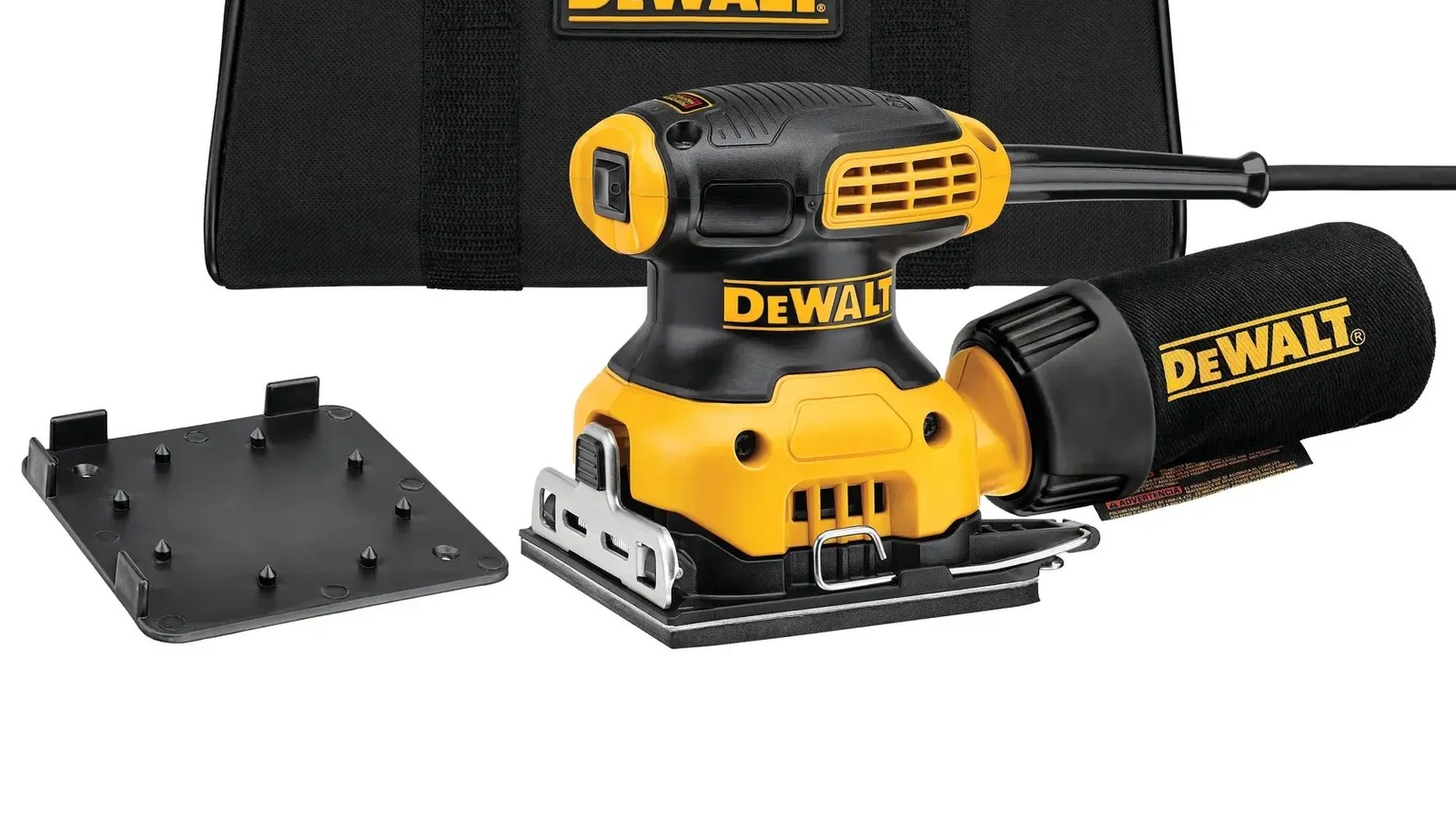
The D26441 oval-port exception
The D26441 is the one model in this group where the shape of the port decides the purchase. ToolCurve lists a dedicated adapter, Hose Adapter for Dewalt 1/4 Sheet Palm Sander – D26441, and the listing specifically restricts it to the oval dust port. If your D26441 has that oval outlet, this is the listing to read. If your sander is a different model with a round or AirLock-style outlet, this adapter is not the match, and the other listings below are the place to look.
Do not assume that another DeWalt quarter-sheet sander can use the D26441 adapter because the tools look similar. Match the port to the listing text.
What AirLock documentation does and does not tell you
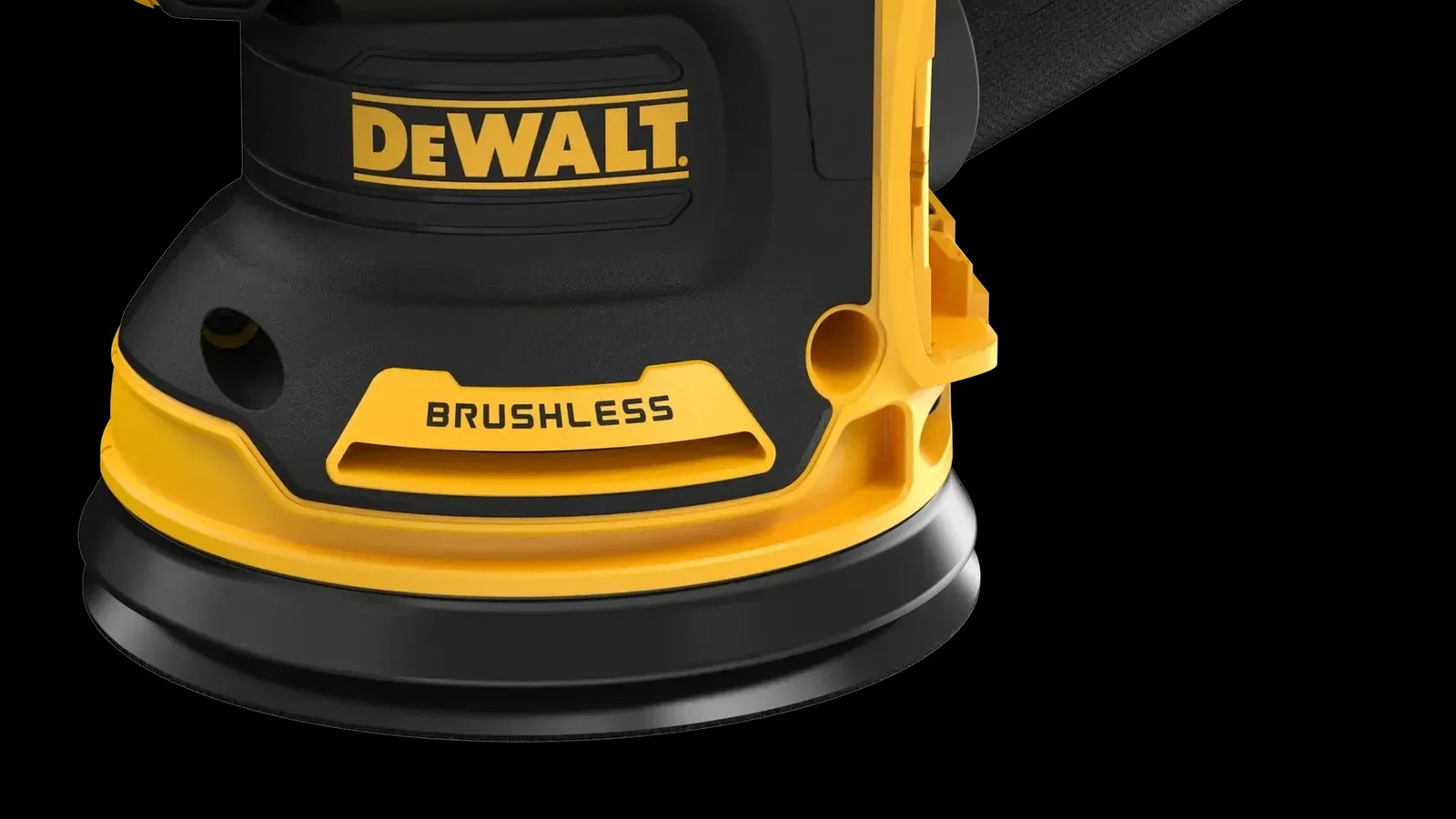
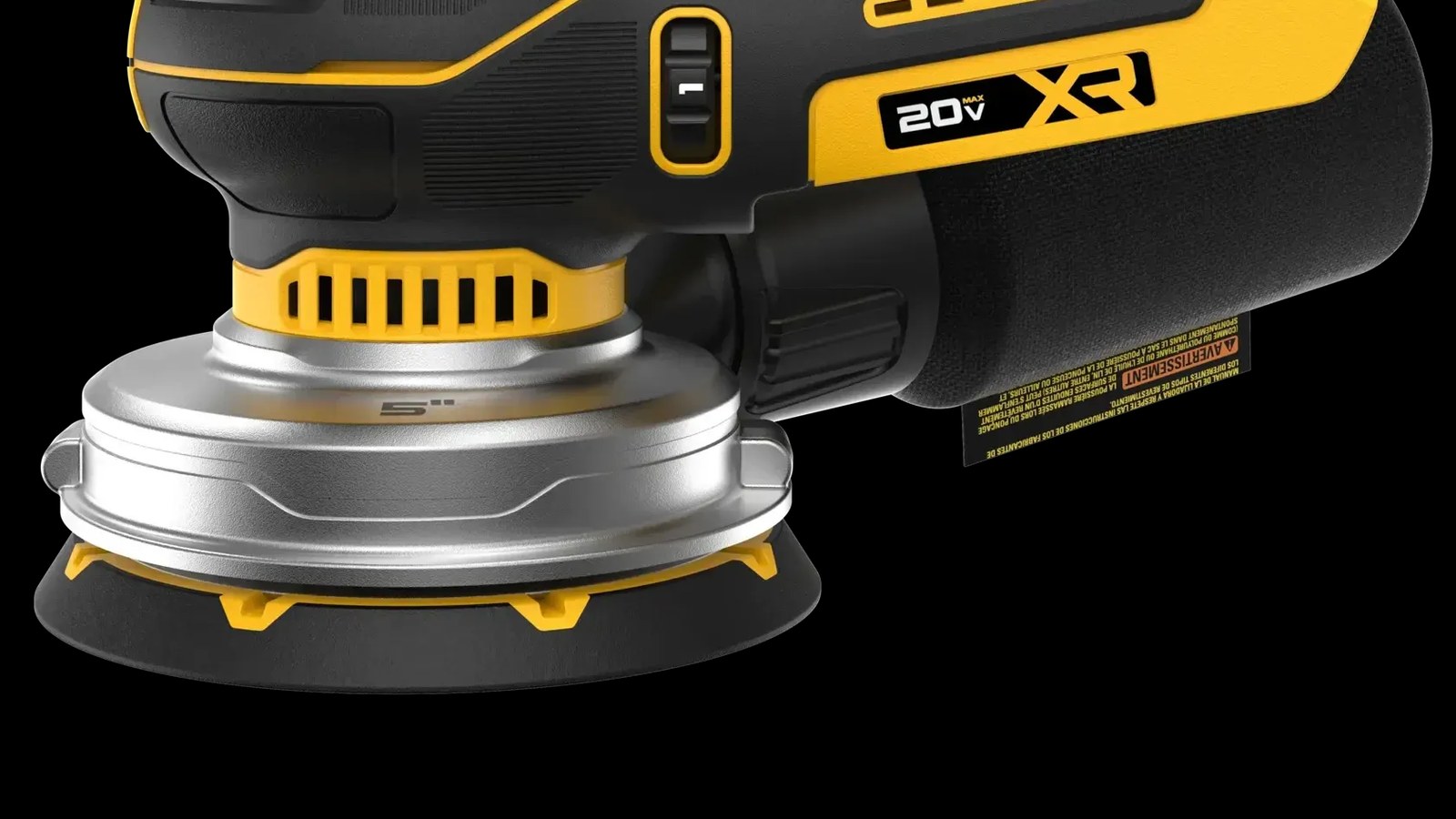
DEWALT’s instruction manuals for the DWE6411 and the DCW210 both identify the dust connection as AirLock. The DCW210 manual describes its built-in port as an AirLock connection compatible with DEWALT dust extractors. That tells you how the sander is designed to connect to DEWALT’s own accessories. It does not establish that any third-party adapter fits. An aftermarket adapter has to be judged against its own listing and the dimensions it publishes, not against the fact that the sander has an AirLock port.
For the DCW211B, manufacturer pages exist, but the full pages could not be opened during research. We therefore have not confirmed its AirLock specification from DEWALT directly. The ToolCurve DCW211B listing makes its own compatibility claim, which is the only support for that model here.
Which listing matches which sander
The table below maps each sander to the listing that names it. The listing column is seller-listed compatibility, not DEWALT documentation, and not a fit test.
| Sander | Listing that names it | Evidence type |
|---|---|---|
| D26441 (oval port) | D26441 adapter | Seller-listed; oval-port restriction stated |
| DWE6411 | DWE6411 adapter | Seller-listed; DEWALT manual confirms AirLock connection |
| DCW200B | DCW200B adapter | Seller-listed; DEWALT Canada page documents direct extractor connection |
| DCW211B | DCW211B adapter | Seller-listed; manufacturer verification outstanding |
| DCW200, DCW210, DWE6421, DWE6423 | General DeWalt sander adapter | Seller-listed; DEWALT manual confirms AirLock for DCW210 |
Two things stand out. First, the general listing and the model-specific listings overlap for the DCW200. We have not confirmed that the general and model-specific listings are the same part, so if your sander has its own dedicated listing, start there. Second, listings are named by model family, so a sander that is not named on a listing is not covered by it. Belt sanders, disc sanders and drywall sanders are outside this guide and are not covered by anything above.
Do not treat the dimensions as interchangeable
The listings publish tool-end dimensions, and they are not identical. The DWE6411 page reports a base inside diameter of 42.16 mm at the tool end. The DCW200B and DCW211B pages report 41.52 mm. A fraction of a millimeter might look trivial, but it is a clear reason not to assume that one adapter works across sanders because they all say “DeWalt.” A measurement alone also does not prove fit, so use the dimension as a reason to buy by model, not as a substitute for checking the listing.
Step 2: Choose the hose side by your actual cuff
Each of these listings offers five hose-side variants: 27 mm, 36 mm, 1-1/4 inch, 1-7/8 inch and 2-1/2 inch. Choose by the cuff on the hose you will actually use, not by the vacuum brand on the label. A shop vac maker may sell several hose diameters, and an older or replacement hose may not match its current catalog.
- Measure the outside of the hose end you plan to connect. If the hose is tapered or has a rigid cuff, measure the cuff, not the corrugated section.
- Check the hose maker’s documentation for its listed diameter when it is available.
- If you are between sizes, do not guess. Compare against the variant names and ask before buying.
This is what makes one sander adapter work with a Festool-style hose in one shop and a Ridgid-style hose in another. The sander side is set by the model, and the hose side is set by the cuff.
The OEM route for 1-1/4 inch non-DeWalt hoses
DEWALT Support has an article, updated January 19, 2023, that addresses a vacuum with a non-DEWALT 1-1/4 inch hose. It recommends the DWV9000 for the DWE6411, DWE6423K, DWE6421, DWE6421K and DWE6420. That is a manufacturer connection option for those listed sanders only. It is not a statement about ToolCurve adapters, and it does not extend to the cordless sanders. If you want to stay on the DEWALT side of the connection, that is the document to read.
DCW200B: chute and battery clearance
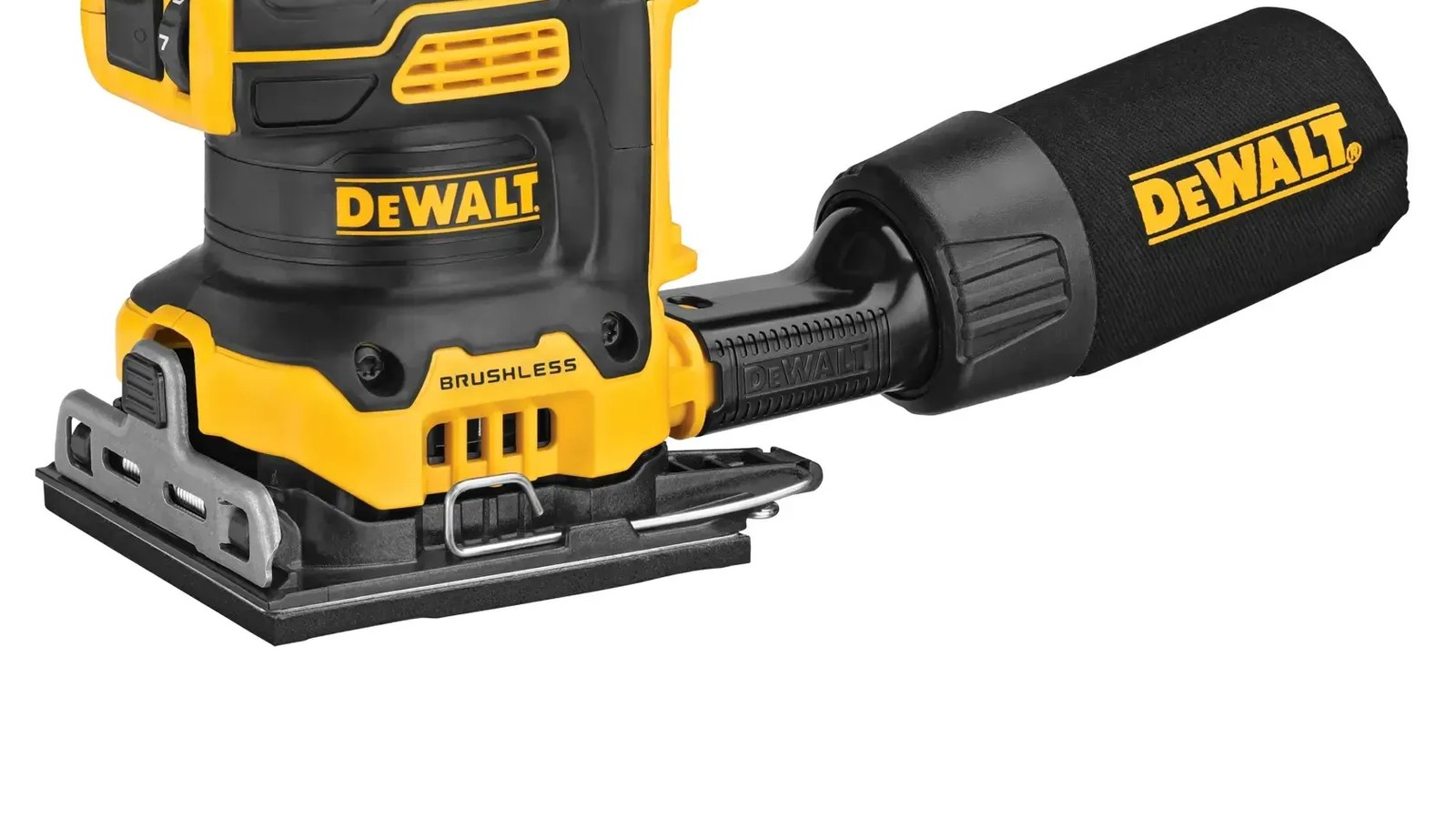
DEWALT Canada’s DCW200B page documents direct connection to DWV010 and DWV012 dust extractors. It also identifies a short dust chute that ships with the sander and an optional long chute, N684701, for batteries of 6 Ah and larger. That is a Canadian-market source. It is useful here because it raises two checks to make before ordering an adapter for a DCW200B:
- Which dust chute is installed on your sander?
- Does your battery size interfere with the hose or adapter once it is attached?
We have not tested adapter and battery clearance, so verify both on your own tool.
A quick pre-purchase checklist
- Read the model number from the sander’s data label.
- Confirm whether the dust port is the oval type (D26441) or another outlet.
- Find a listing that names your exact model. A look-alike listing does not count.
- Measure your hose cuff and match it to one of the five hose-side variants.
- For the DCW200B, check the installed chute and your battery size.
- For the DCW211B, treat compatibility as seller-listed only until DEWALT documentation is confirmed.
Bottom line
Identify the sander, then the port, then the cuff, in that order. The D26441’s oval port is the clearest exception, and AirLock documentation from DEWALT describes the sander, not the adapter. When your model is named on a listing and your hose cuff matches one of its variants, you have the strongest evidence this research supports. If anything is ambiguous, such as an unlisted model, an unusual hose or a different battery, resolve it before ordering. For most sanders in this group, start with the general DeWalt sander adapter only if your model is one of its named models.
Comments