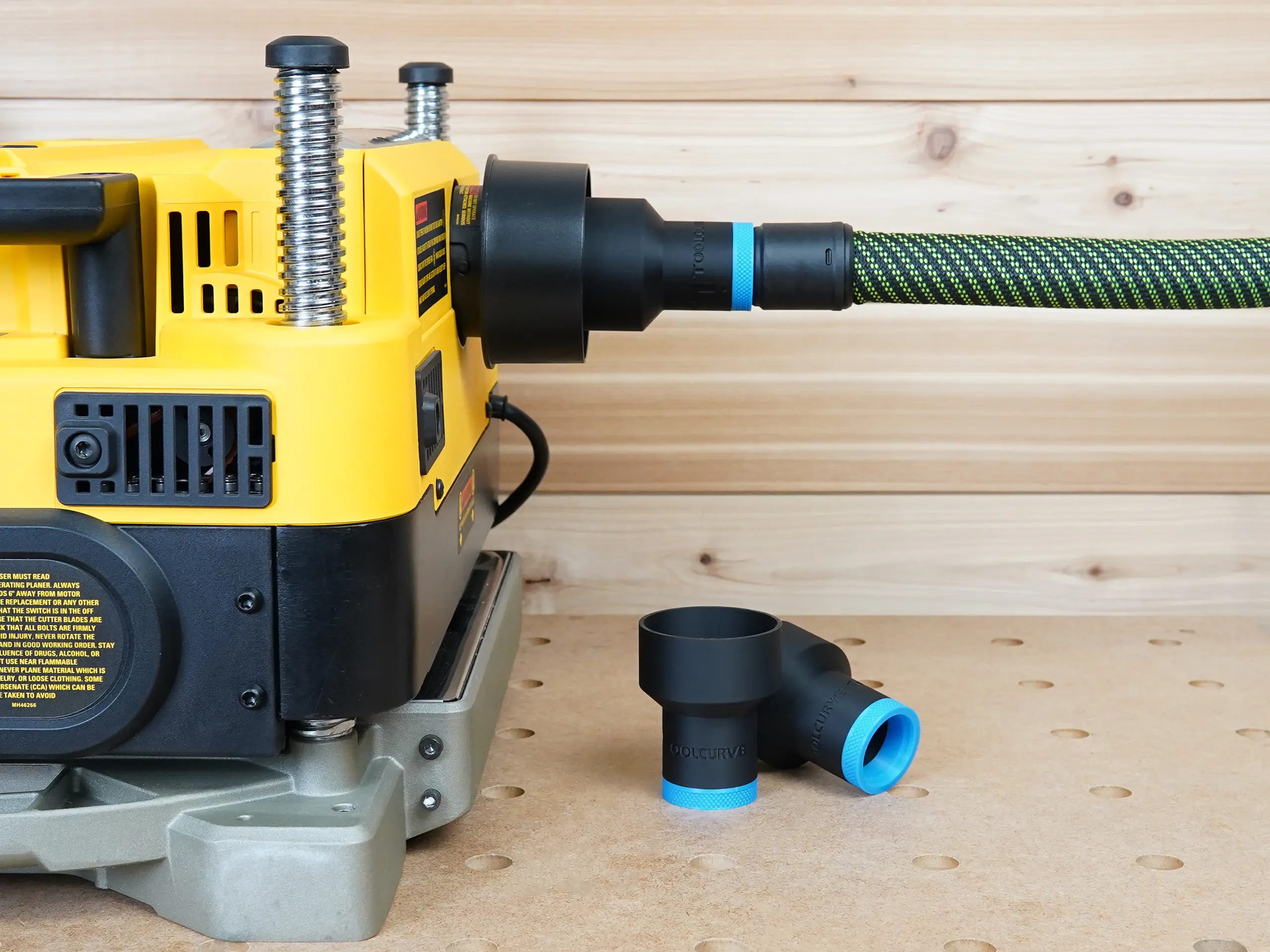
If you own a DeWalt DW735 and already have a shop vacuum, it is tempting to look for an adapter and plug the two together. The physical connection is the easy part. The harder question is whether a shop vacuum can handle what a thickness planer produces. DeWalt’s instruction manual addresses this directly, and it should shape your purchase before any hose or adapter does.
Some links in this article go to Amazon. As an Amazon Associate, ToolCurve earns from qualifying purchases.
What DeWalt says about shop vacuums
According to the DW735 instruction manual, DeWalt advises against connecting a shop vacuum to the planer. The stated reasons are that most vacuums cannot accommodate the volume of chips a planer produces, and that the hose may clog. The manual describes the planer’s fan-assisted chip ejection as working with an independent dust-collection system. It also says the round dust port is for a 4-inch (100 mm) dust collector hose, which tells you the size of system DeWalt has in mind.
That is a manufacturer recommendation, and this article does not override it. We have not tested the DW735 with any vacuum, and we are not offering airflow figures or a list of vacuums that will cope.
Why a planer is different from a sander or miter saw
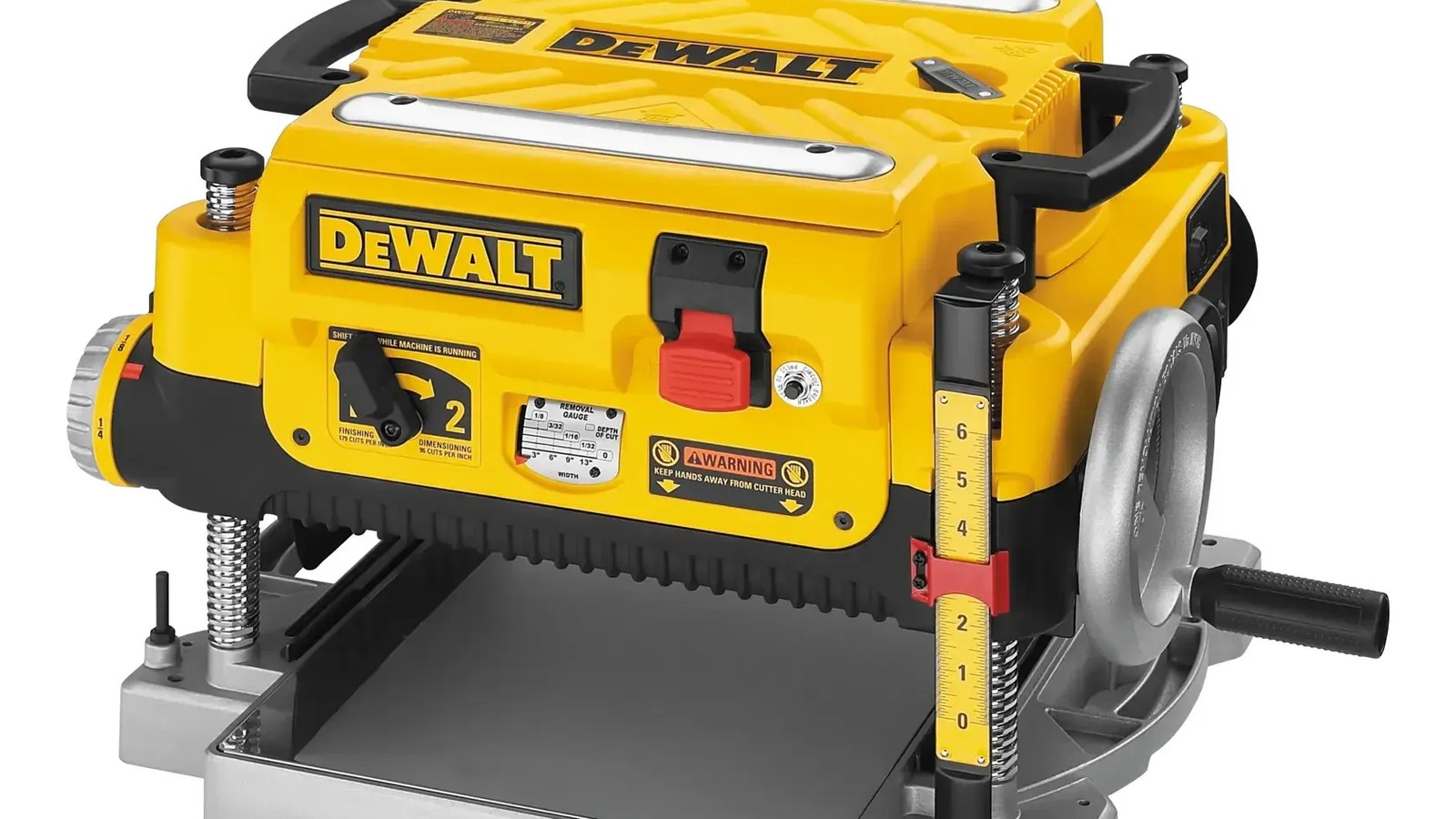
Sanders, routers, miter saws and table saws make fine dust. A thickness planer is a different problem. It removes wood in thick, bulky shavings, and it does so continuously while a board feeds through. Chip volume per minute can be far larger than the fine dust a sander produces, and the chips are lightweight and bulky, so they can bridge and pack inside a narrow hose or port.
A typical shop vacuum is built for relatively small volumes of debris, and its canister fills quickly. Fine-dust tools and planers stress a vacuum in different ways, and the DW735 manual puts planers in the category where DeWalt advises against vacuum use.
Adapter fit versus capacity
Two separate questions get mixed up here:
- Fit: Does the hose physically connect to the planer’s dust port?
- Capacity: Can the collection system move and store the chips without clogging?
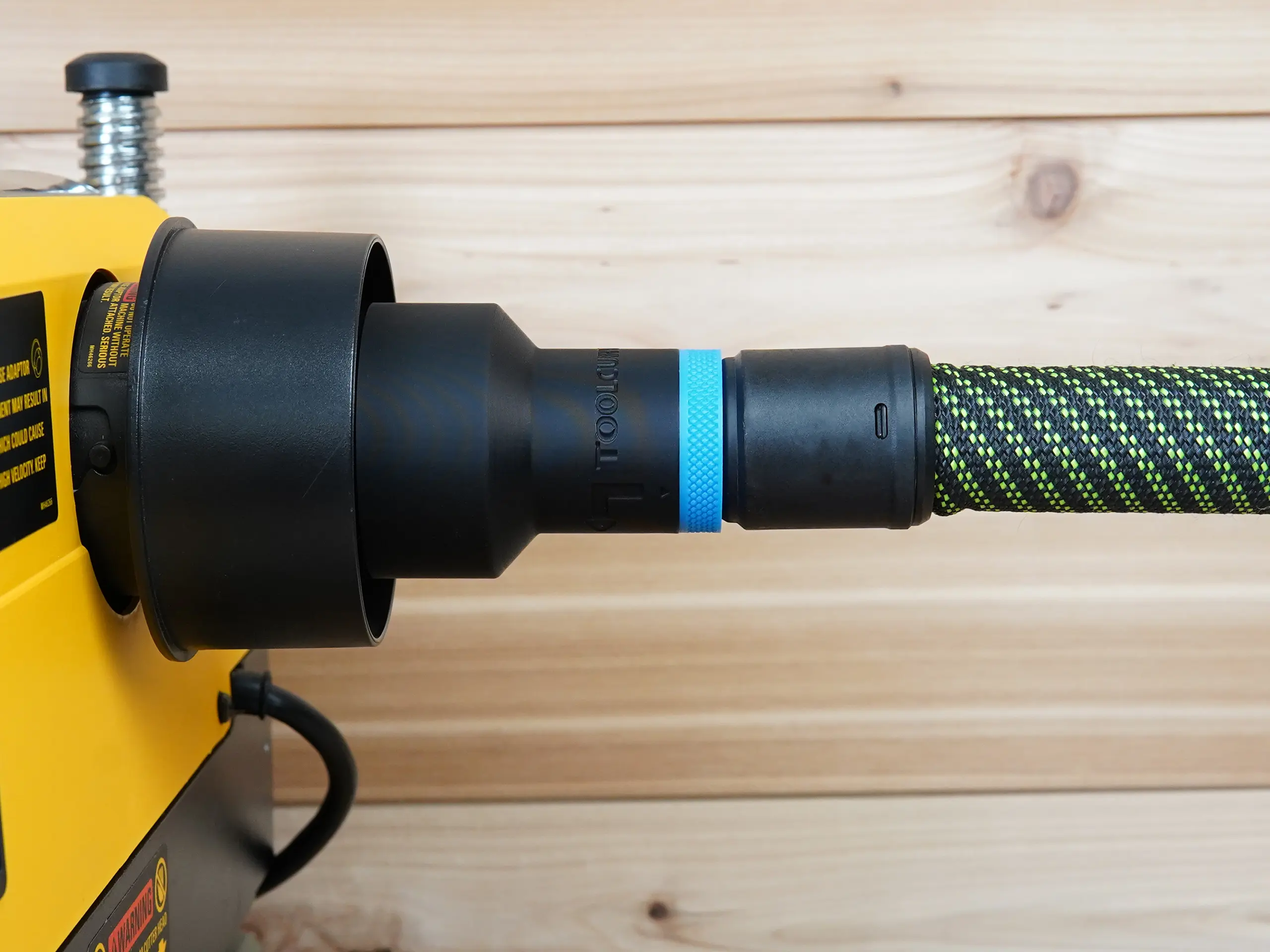
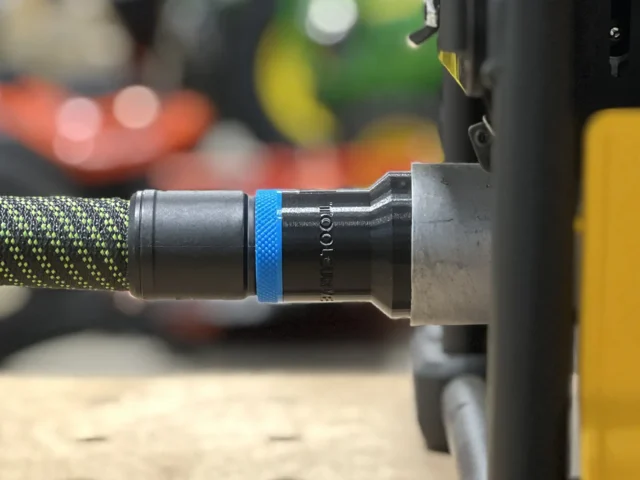
An adapter answers only the first question. ToolCurve’s Hose Adapter for Dewalt Planer DW735 is listed for the DW735/DW735X and offers several hose-size options: 27 mm, 36 mm, 1-1/4 inch, 1-7/8 inch and 2-1/2 inch. Those options describe physical connections. They are not manufacturer approval, and they are not a statement that a given vacuum will keep up with planer chips. If your dust collector already runs a 4-inch hose, it goes straight onto the round port and you don’t need a reducing adapter. The adapter is for smaller hoses, like a dust extractor’s 27 mm or 36 mm hose.
ToolCurve lists the tool end at 62.56 mm inside at the top and 61.50 mm at the base, and 67.00 mm outside at both. These are measurements only; they do not tell you which end connects to the planer, and a measurement alone is not proof of fit or performance.
What to do before buying
- Confirm your exact model. The DW735X is the same planer sold as a kit with infeed and outfeed tables and an extra set of knives, and it uses the same manual. Check the model plate on your machine rather than relying on a listing title.
- Read the dust-collection section of your manual. DeWalt’s own wording on shop vacuums and independent dust collection comes first.
- Decide what the adapter is for. If you are connecting to a dust-collection system sized for chip volume, confirm the hose size you actually own, then pick the matching option.
- Ask us if something is unclear. If your setup has an unusual hose or port, contact ToolCurve before ordering. Installation-specific uncertainty needs owner confirmation, not a guess.
If you are considering a shop vac anyway
We cannot recommend a particular vacuum, a minimum airflow figure or a separator workaround, because we have no manufacturer evidence for any of them. Anyone who goes against the manual’s advice takes on the risk of clogging. DeWalt warns that the hose may clog and stop the flow of chips. That is the manual’s warning, not a result we measured.
The manual is clear on safety. Unplug the planer before you change accessories or clear a clog, and never put anything into the dust ejection chute while it’s plugged in.
Where a vacuum still makes sense in the same shop
The vacuum you own is not wasted. It is the type of collector that suits the fine-dust tools in a shop. ToolCurve’s existing guide, How to Choose a DeWalt Hose Adapter for Festool and Shop Vacs, covers model-specific adapters and hose selection across DeWalt tools, so we will not repeat its selection chart here.
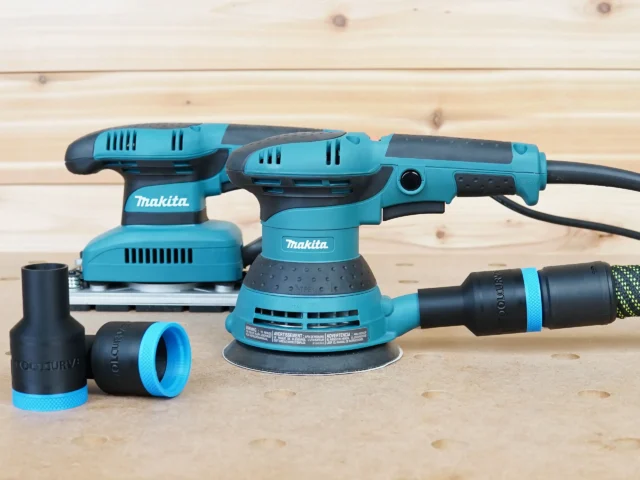
For example, sanders and miter saws produce finer debris, and ToolCurve lists dedicated adapters such as the Hose Adapter for Dewalt Sander and the Hose Adapter for Dewalt Miter Saw. Whether those tools suit your vacuum depends on your exact model and hose, so verify both before ordering.
Quick reference
| Question | What answers it |
|---|---|
| Does the hose connect? | Adapter size options and your hose diameter |
| Will it handle chips? | Manufacturer guidance and the capacity of your collector, not the adapter |
| Is my planer covered? | Model plate: DW735 or DW735X body |
| Is a shop vac approved? | DeWalt’s manual advises against it |
Bottom line
An adapter solves a connection problem, not a capacity problem. For the DW735, the manufacturer’s own guidance is that a shop vacuum is a poor match for planer chip volume, and the manual describes the planer working with an independent dust-collection system. Buy the adapter only once you know what collector it will connect to and that the hose size matches. Use your shop vacuum for the fine-dust tools it suits, and treat the planer as its own collection problem.
Comments